Europe’s melting glaciers: A documentary

DW Documentary. (2019, July 31). Climate Change: Europe’s Melting Glaciers
     [Video file]. Retrieved from https://www.youtube.com/watch?v=K9MaGf-Su9I

Many people still believe that climate change is simply a myth, but the Alps are roaring with evidence that this isn’t the case.

In the eyes of extreme mountain climbers, global warming has had a massive impact on the conditions for climbing in the Alps. The glaciers are melting.
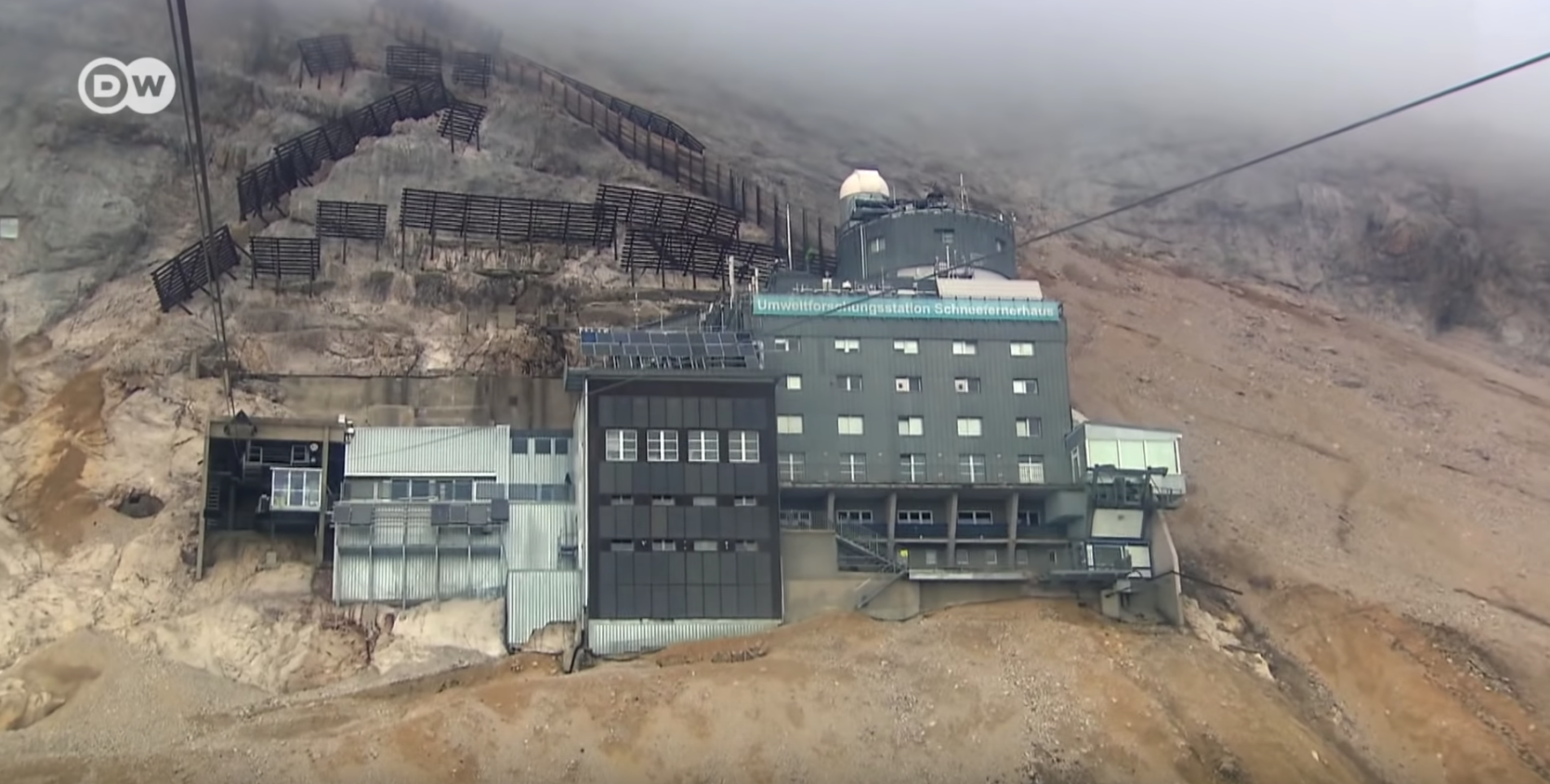
The permafrost (parts of the ground that remain frozen for years in a row) is now beginning to melt. In winter season, the snow won’t stay on the ground like it used to. This results in relying mostly on snow canons to fill the pistes.

This effects areas such as ski resorts because their business relies 100% on ski-tourists. Without good snow, people can’t ski and therefore the the shops and cafes in the mountain run out of business.

By the 2080’s, it’s estimated that 80% of the Alps will no longer be covered in snow.

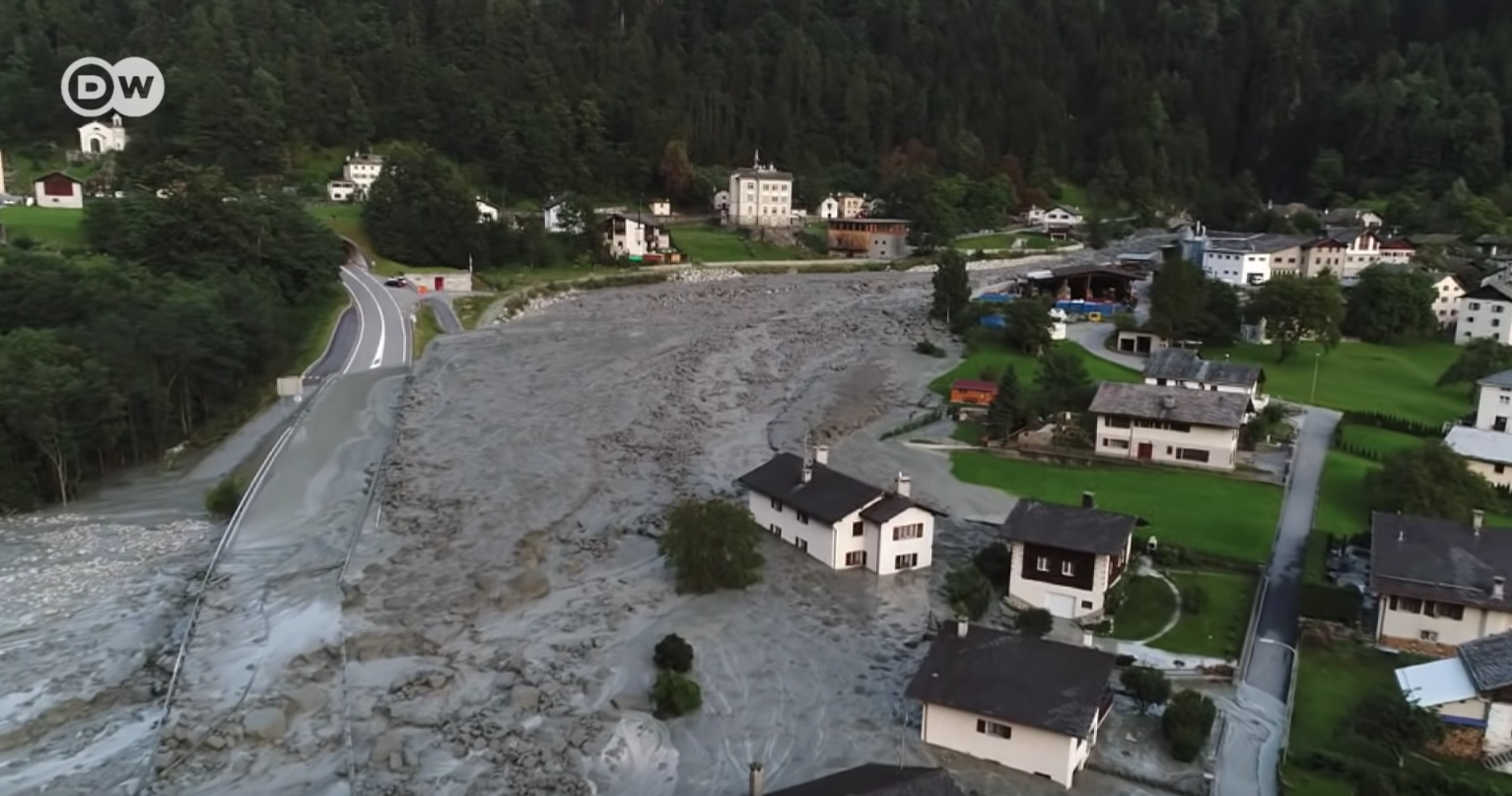
This has huge consequences on both a local and global scale. The melting snow and ice causes rock and mud slides which have destroyed various villages in Switzerland and surrounding the Alps. This has forced many families to evacuate and move elsewhere.
Environmental News: Recognizing the Global Temperature Rise

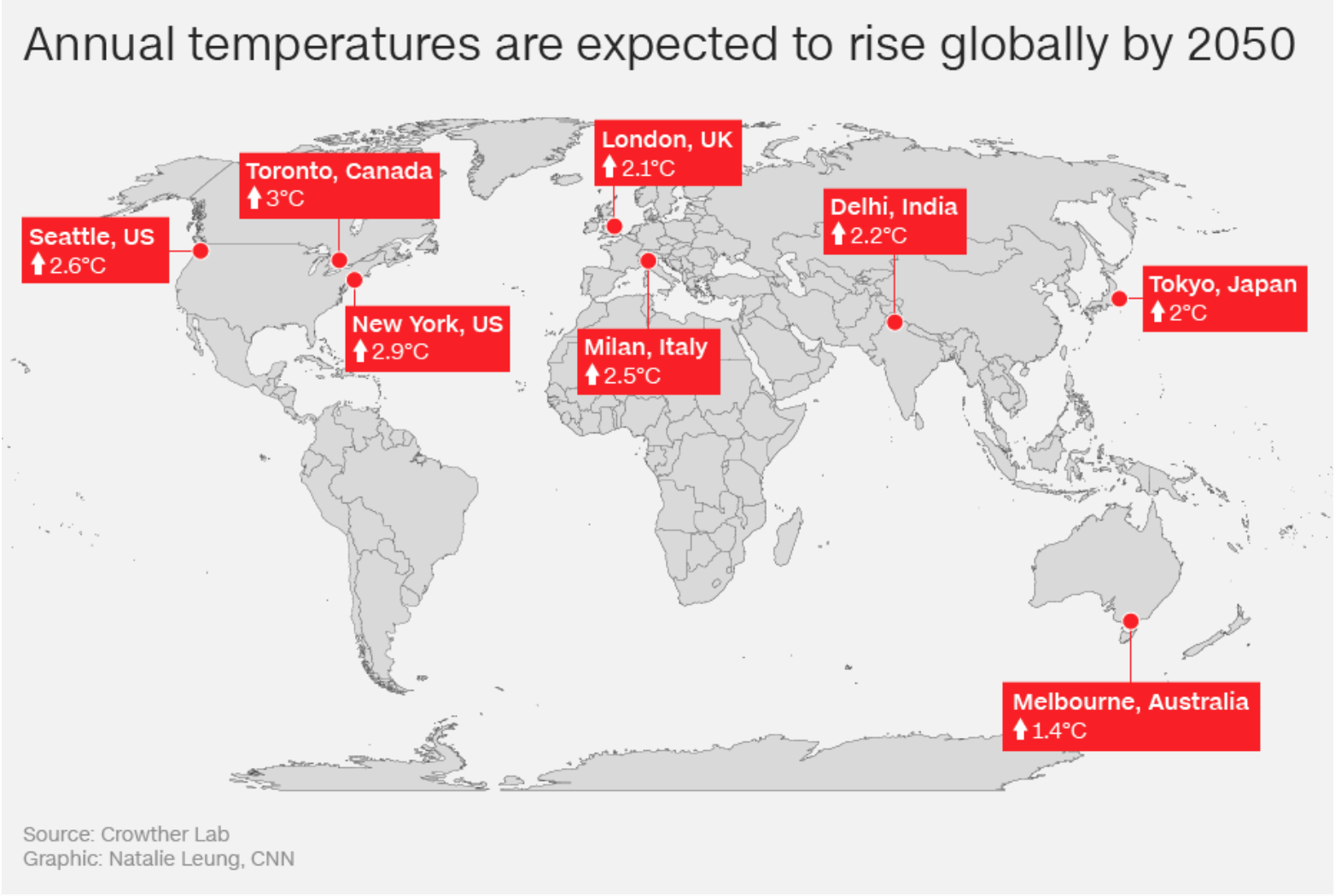
Many people around the world hear about global warming without fully understanding the implications and consequences. We are told that in certain areas, the temperature will rise by a certain amount within the next couple of years – but what does that look like?

Areas of Europe are predicted to face the most immense temperature changes. In the summer, it’s expected to become 3.5 degrees Celsius warmer and in the winter 4.7 degrees Celsius warmer.

This can be hard to put into perspective which is why a study at ETH, a university in Zurich, was conducted to compare the current temperature of one city with another which has the temperature of how the first city would be in the future.

The lead author of the study, Jean-Francois Bastin said that these comparisons “help people visualize the impact of climate change in their own city, within their lifetime”.

It is said that London will feel more like Barcelona, Madrid like Marrakesh, Seattle like San Fransisco and New York like Virginia Beach.

This has major consequences for the cities in tropical areas. It doesn’t increase the temperature as much in those places but the the wet and dry seasons will change significantly. It will lead to extreme floods during the wet seasons and extreme drought and water shortage in the dry season.

An example of a tropical place with extreme drought is Chennai, India which I spoke about in the previous blog post.

It is extremely difficult to find a solution for this as it is not something which can be saved over night. It requires the whole world to face up to this issue and be determined to do something about it. We need to reduce CO2 emissions; save energy, consume less, use greener transportation and invest in renewables.

If the world could collectively follow those guidelines to fight climate change then I believe we can make a difference in how our planet will look in the next generations to come.

References:

Yeung, J. (2019, July 11). By 2050, London’s climate will be as warm as
     Barcelona’s, study says. Retrieved July 16, 2019, from
     https://edition.cnn.com/2019/07/11/europe/climate-cities-report-intl-hnk/
     index.html

Environmental News: Drought in Chennai, India

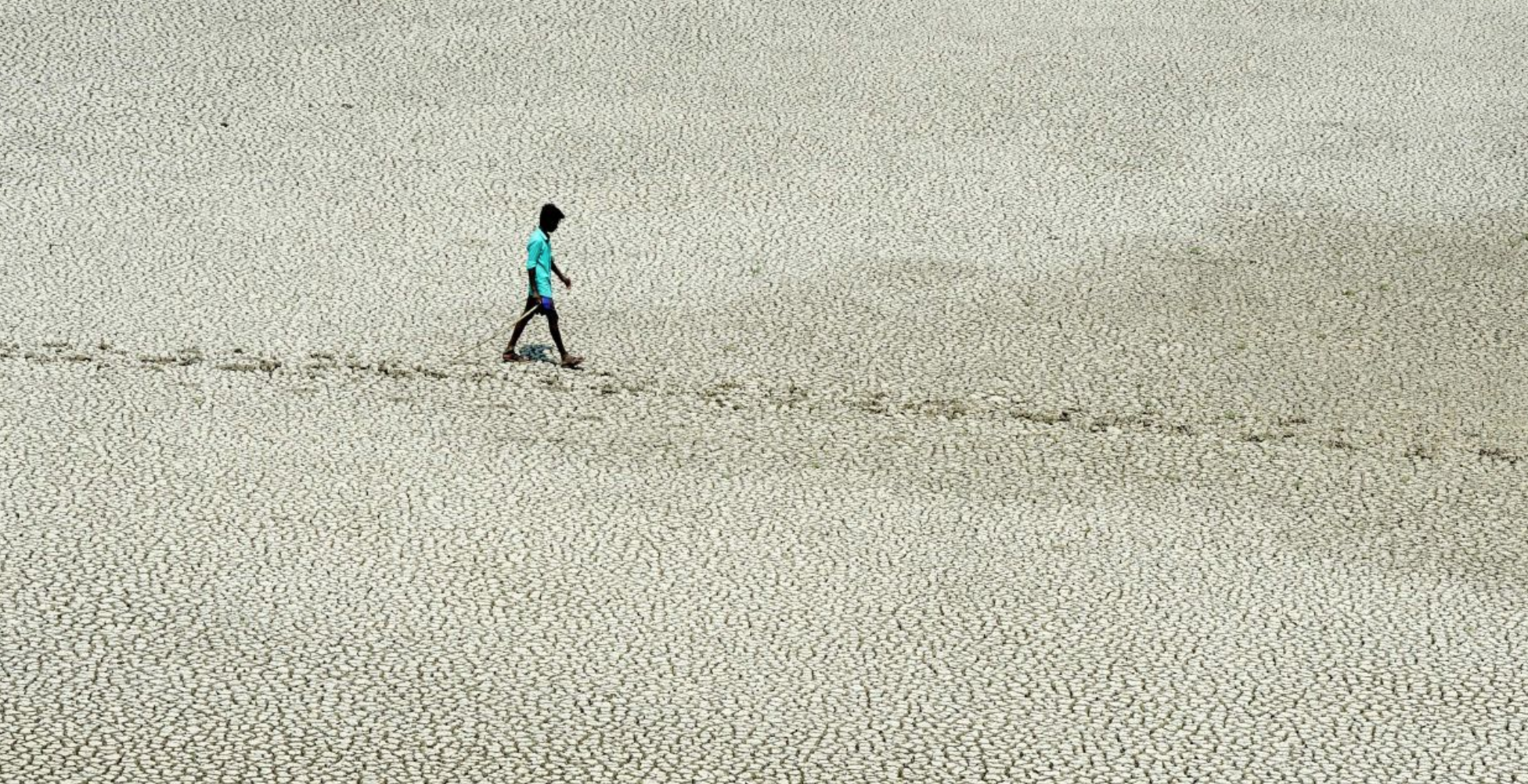
Across India, many major cities are running out of water supplies and are close to facing drought. One of these cities is Chennai. It is located on the coast of Eastern India and has a population of about seven million people. The city has four main reservoirs which have almost run dry. India has had a nationwide heatwave, causing citizens to fight over the water left. It is not unusual, however, that there has been fatal heatwaves draining all the water sources in small cities. Unfortunately, Chennai is the first large city to face a shortage as severe as this. To blame is a combination of the heatwave, climate change and poor preparation for the hot weather.

Chembarambakkam Lake, on the outskirts of Chennai, on May 21.
Arun Sankar/AFP/Getty Images

“The shortage has forced some schools to shut, companies to ask employees to work from home, and hotels to ration water for guests” (Reuters, 2019)

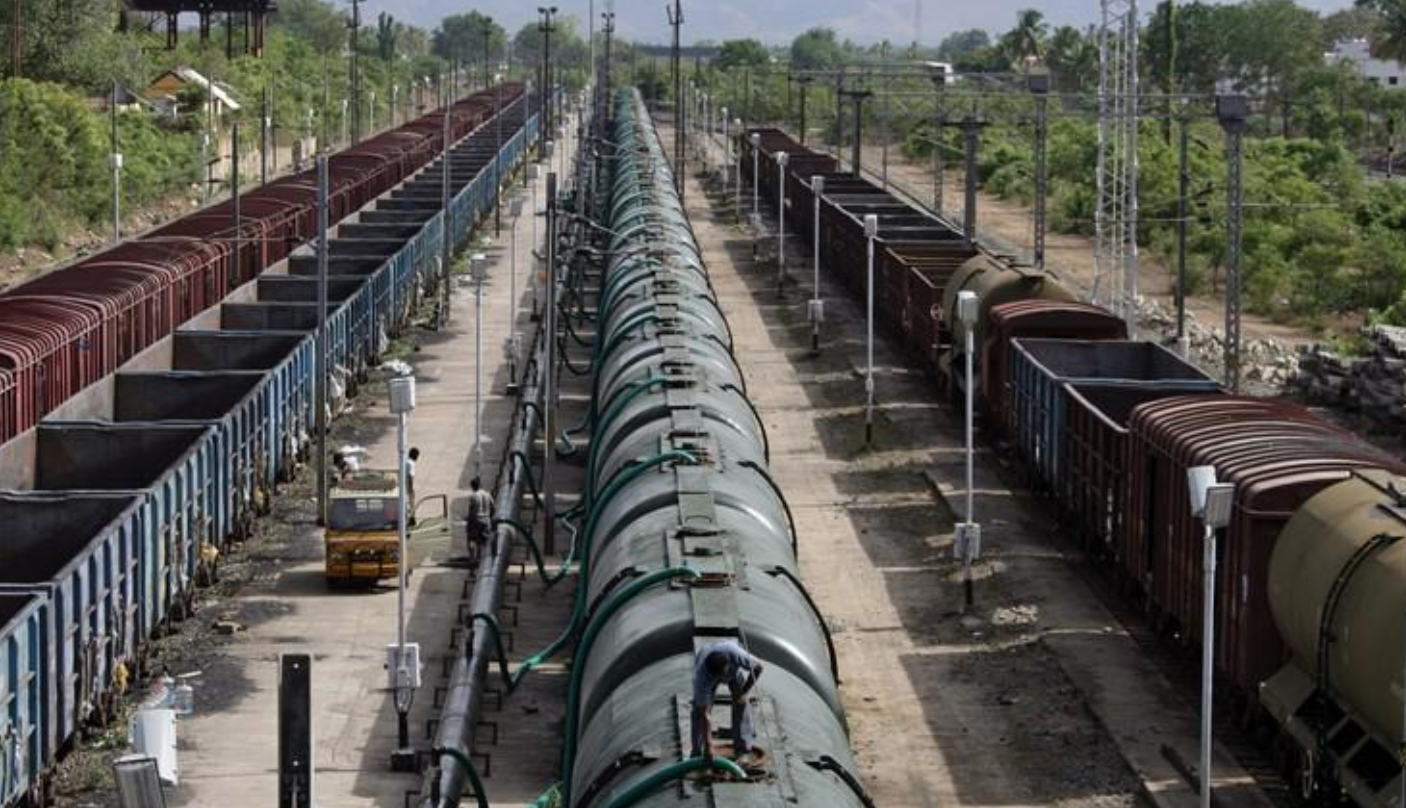
The challenges are getting new and usable water to Chennai and making it last. So, what’s the solution?

July 11, 2019. REUTERS/P. Ravikumar

On Thursday, July 11th, the Indian authorities filled trains with water to send to Chennai. However, people who live on the outskirts of the city are trying to block the railroads to the inner city because they are scared that the water supplies will be prioritized for the “rich”, such as luxury hotels and big businesses.

I agree that at this time, sending trains with river water to the areas with dry reservoirs, is the most efficient method of preventing a complete drought. Nevertheless, it will not remain capable of providing water to everyone who is in need in the long term. As stated earlier, the businesses and hotels are prioritized, leaving other citizens with absolutely nothing. If this continues, the Indian authorities are going to have to provide a better solution which reaches everyone.

References:

India’s water crisis, in photos. (2019, June 22). Retrieved July 14, 2019, from
     https://edition.cnn.com/2019/06/20/india/gallery/
     india-water-crisis-chennai-drought/index.html

Ravikumar, P. (2019, July 11). Water train set to relieve drought-hit Indian
     city. Retrieved July 14, 2019, from https://www.reuters.com/article/
     us-india-water-chennai/
     water-train-set-to-relieve-drought-hit-indian-city-idUSKCN1U62A9

Judicial Independence Infographic

When completing my first draft, I was frustrated about not being able to write long passages of text since I prefer structured writing to a visual display. Being restricted in that way, I felt that my research had to be more concise in order to have a deep understanding to further paraphrase.

I also felt that I spent too much time trying to make it look visually appealing; structuring the page with each necessary sections. This set me back a lot because I ended up having a lot of work to do. My way of solving this issue was to write everything I needed in another document and then copying it over when the structure was done.

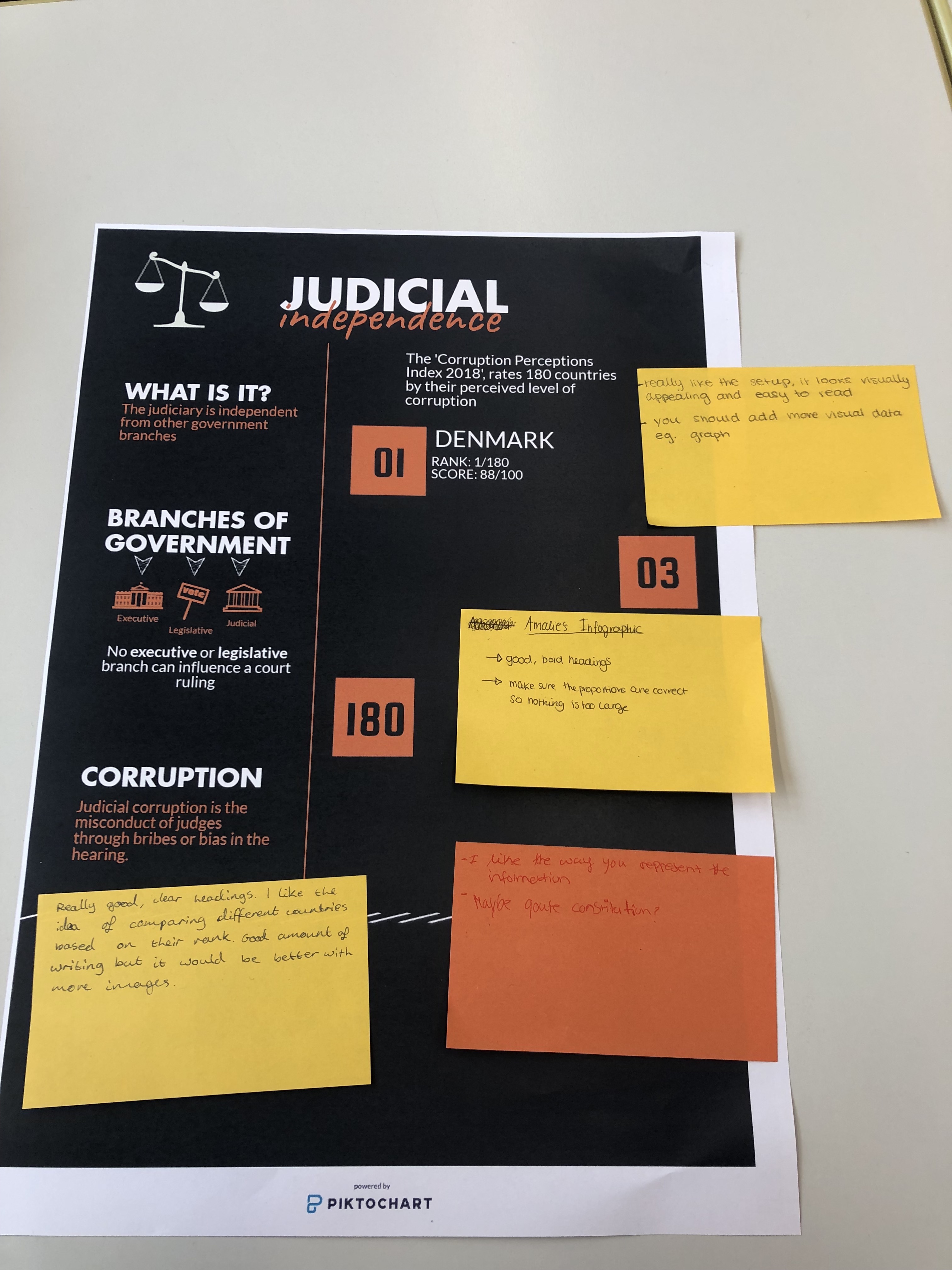
My classmates commented on my first draft to give me feedback and things to improve on. Mostly it was positive and a few of the improvements could be sizing, more visual and of course finishing it.

This is how my first draft looked. The post-it notes are comments from my classmates.

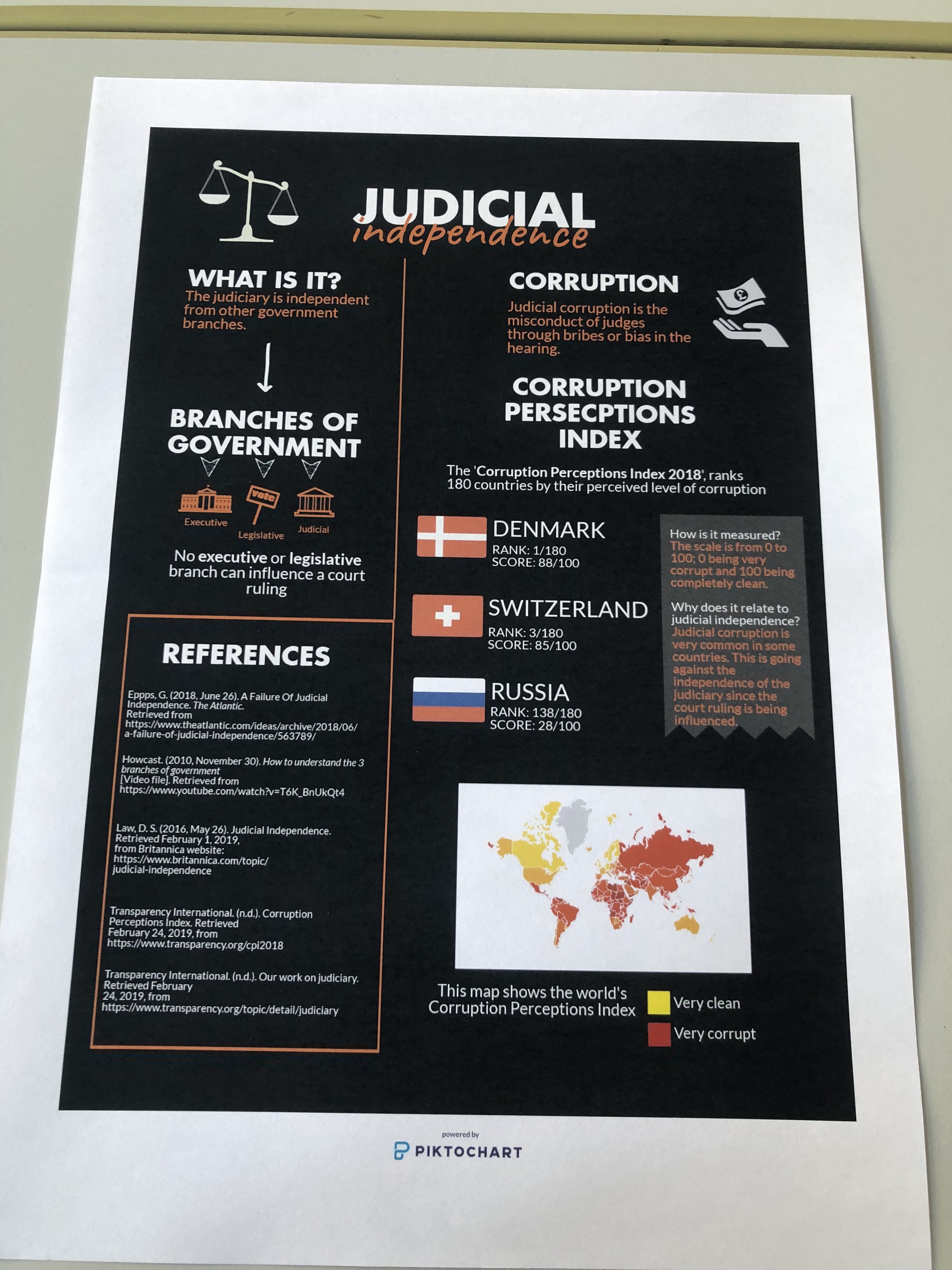
After completing the assignment, I felt I had improved my organisation of the infographic and improved on my classmates comments. My infographic ended up displaying my understanding and research of judiciary independence very well. There are some advantages of showing learning in a visual way because it is simple and explains itself. However, I need to improve a lot on this skill and thereby I find it difficult at the moment.

On my final infographic, I had created an explanation of what judicial independence is in a summary. Then on the right, I used three real world examples of corruption since that is a big aspect of judicial independence. I used various visuals as well as supporting them with small texts. Finally, I included my reference list at the bottom.